
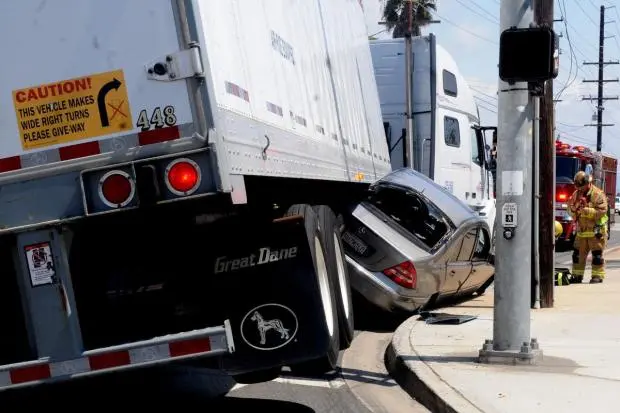
A truck accident isn’t just a bigger car accident, and treating it like one costs people money. The trucking company already has lawyers on the case within hours. Insurance can come from several policies at once. And the evidence that could win your case starts disappearing fast. That’s why you need a truck accident lawyer: to catch what most people miss, chase down everyone who might actually owe you money, and turn your claim into a number grounded in reality, not whatever an adjuster offers first.
Below, Landver Law breaks down the key legal considerations that decide how a case like this plays out.
Why Truck Accident Claims Are Legally Complex
A regular car accident usually comes down to two drivers, two policies, and a fairly predictable claims process. A truck wreck is messier. There’s the driver, sure, but also the trucking company, maybe a separate leasing company, a maintenance contractor, whoever loaded the cargo, and occasionally the manufacturer of a failed part. Each of those can carry its own insurance, and on top of that sits a stack of federal rules from the Federal Motor Carrier Safety Administration that ordinary car accidents never have to deal with. At its core, it’s still personal injury law. It just comes with more moving pieces than most people expect. A California Truck Accident Attorney is used to untangling that structure fast, because figuring out who actually owes you money is rarely obvious on day one. That gap between what looks obvious and what’s actually true is a big part of why you need a truck accident lawyer before you sign anything or say much to anyone. Wait too long, and the records disappear, the stories smooth themselves out, and what should’ve been straightforward turns into a fight.
What to Do Immediately After a Truck Accident
Get to safety first. Everything else can wait a minute. Once you’re clear of traffic, call 911, even if the damage looks minor. A police report on file matters more than most people realize once a claim gets going. Snap photos while you’re still there: the vehicles, the road, skid marks, any visible injuries, before a tow truck hauls anything away. Get the driver’s name and license number, whatever company name is stenciled on the door, and grab a name and phone number from anyone who stopped to watch. Feel fine? Get checked out anyway. Pain doesn’t always show up on schedule, and a same-day medical record ties your injuries to this crash, not to something that happened weeks later. One more thing worth doing: look for a DOT number near the cab door. Small detail, but it can identify the carrier when nothing else does.
What to Do in the Days After the Crash
The first hours after a wreck get most of the attention, but honestly, the days that follow matter almost as much. What you say now, and what you sign, has a way of shaping the whole claim later.
Avoid Statements That Could Harm Your Claim
Skip the apology at the scene. It feels natural, but insurers can use it against you later. And be careful with anyone who calls asking for a recorded statement, no matter how friendly they sound. Trucking insurers train their adjusters to ask casual-sounding questions that are really designed to get you to downplay your injuries or take on a share of the blame. Social media is worth thinking about too. A cheerful photo from a weekend trip, posted two weeks after the crash, has quietly sunk more than one otherwise solid case.
Be Careful With Early Settlement Offers
Sometimes an insurer moves fast, dangling a check before you’ve even finished treatment. That’s not generosity, no matter what it sounds like. It’s a way of closing the file before the real scope of your injuries, or your lost income, comes into focus. Sign that release, and the claim is done. Doesn’t matter what shows up on an MRI six weeks from now.
How Truck Accident Evidence Is Investigated
Trucks carry something like a black box: an electronic control module quietly recording speed, braking, and engine data right up to the moment of impact. The problem is timing. Carriers often keep that data only a short while before it’s overwritten, so somebody has to request it fast. An electronic logging device also shows how many hours the driver had already put in before the crash, and that number matters, since fatigue behind the wheel causes a surprising share of these wrecks. Dashcam footage, maintenance paperwork, dispatch records: none of it tells the whole story alone, but together it starts to. Even the road itself is evidence, for a while. Skid marks wash away with the next rain, and a damaged truck often gets repaired or scrapped long before a case reaches court.
Who Can Be Held Liable for a Truck Accident?
Most people start with the driver, and that’s fair. But responsibility rarely stays there. A trucking company can end up on the hook too, say, for putting an exhausted or under-trained driver behind the wheel in the first place. Worn brakes point toward a maintenance contractor. Freight that shifts mid-drive points toward whoever loaded it. Sometimes a defective part is the real cause, which drags a manufacturer into the mix. Figuring out who caused what, and how much of it, is where these disputes get genuinely complicated. It’s also exactly why you need a truck accident lawyer instead of guessing at fault from the sidelines. Left alone, insurers representing each party tend to point fingers at everyone else first, and an unrepresented person can end up stuck in that back-and-forth for months.
How Is a Truck Accident Different From a Car Accident?
A fully loaded commercial truck can weigh twenty times as much as a passenger car. That gap alone explains why truck wreck injuries tend to be so much worse, and why recovery drags on longer. Add federal safety rules ordinary drivers never think about, insurance limits far beyond what a typical car carries, and a company that already has lawyers on retainer, and comparing this to routine car accidents stops making sense. Most car accidents settle in a fairly predictable range once fault is obvious. Truck cases rarely move that smoothly, since the injuries are often severe and nearly every party named has a reason to slow things down rather than speed them up.
What Compensation Can You Seek After a Truck Accident?
After a truck accident, compensation isn’t just one number. It usually breaks down into a few buckets, and a claim that only covers the obvious ones often leaves money on the table.
Economic Damages
Think of these as the costs with a receipt attached: ER visits, surgery, physical therapy, the paycheck you missed while laid up. Serious injuries add another layer, future treatment and whatever earning power got taken away for good. That piece alone often becomes the largest part of the whole claim.
Non-Economic Damages
There’s no invoice for pain. None for a limp that never quite goes away, or for the way someone flinches now every time a semi passes on the freeway. California law still counts that as a real loss, and real losses get compensated, paper trail or not.
Wrongful Death and Other Serious Losses
A fatal truck accident leaves a family with funeral costs, lost income the household counted on, and a relationship nothing replaces. Catastrophic injuries raise a version of the same question, just stretched out over decades: who pays for the care this person is going to need for the rest of their life?
How Comparative Fault Can Affect a Truck Accident Claim
California uses what’s called pure comparative fault. In plain terms: you can be partly to blame for a crash and still walk away with compensation, just reduced by whatever share of the blame lands on you. Trucking companies know this rule cold, and their insurers will lean on it hard, arguing you contributed to the crash somehow to shave down what they owe. That argument only wins when the other side has better evidence than you do, which is exactly why solid, early documentation separates a fair settlement from a lowball one.
How Can a Truck Accident Lawyer Help?
This is really the heart of why you need a truck accident lawyer instead of handling everything alone. An attorney gets preservation letters out before evidence disappears, identifies every party who might actually be liable instead of just the driver, and calculates damages that include future costs most people don’t think to add up in the first few weeks. Negotiations also change once legal representation sits across the table from a well-funded insurer. And if a fair settlement never shows up, the case can move into litigation rather than sit there, stalled, at a number nobody should accept.
Frequently Asked Questions
A handful of questions show up in nearly every first call with truck accident lawyers. Here’s the short version of each.
Probably not. That adjuster’s paycheck comes from the company that might owe you money, not from you, and a statement that feels casual over the phone can quietly work against your claim later.
Bring what you’ve got: the police report, scene photos, medical records so far, insurance paperwork, anything the trucking company or its insurer has already sent. A witness’s name and number is a bonus if you managed to grab one. None of it is mandatory for a first meeting, though. You fill most of it in later, once the case is actually moving.
Yes, and this happens more often than people expect. A denial usually means the case needs stronger evidence or a formal dispute process, not that it’s over. That’s exactly the kind of situation an experienced attorney knows how to work through.