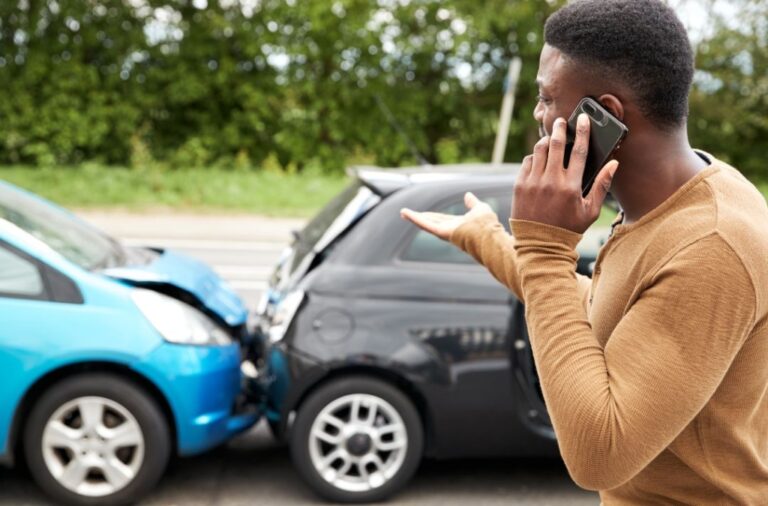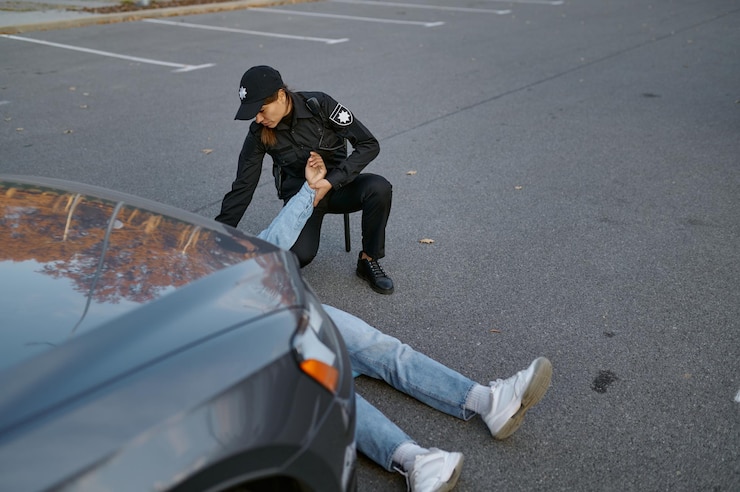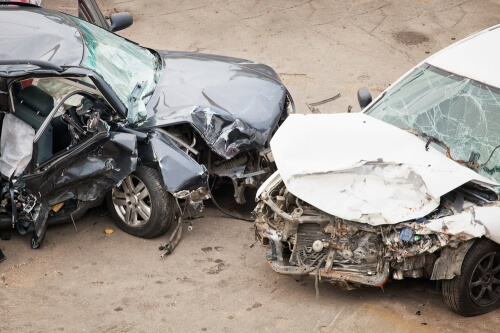
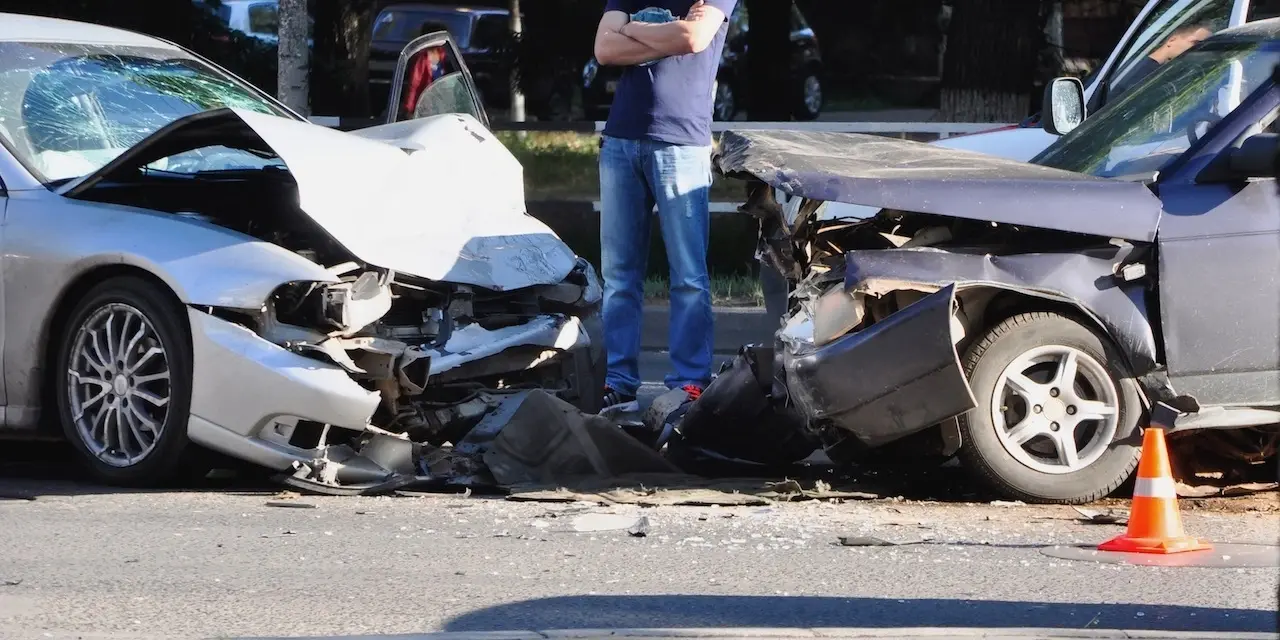
Being the blameless driver in a California crash does not mean the other side’s insurer will simply pay. Fault still has to be shown on paper, and the evidence gets judged by the very company that would cover the damage. Meanwhile, the legal clock has already started. In our practice, good claims lose value in week one over small things, like a friendly call with an adjuster or a doctor’s appointment pushed back. Our office takes over the evidence and works with both insurers, and we price the claim based on bills and records. The client’s job is getting better.
First Steps After a Car Accident That Wasn’t Your Fault
Here is how we want a client to handle the first ten days, and it also answers the question people search as “what to do after a car accident not your fault.” Some of these steps protect health. The rest protect evidence, which can vanish by the end of the first week.
Check Everyone for Injuries, Then Dial 911
Check everyone in both cars before anything else, and call 911 even if the bumper has only a scuff. Dispatch logs the call, paramedics note any complaint of pain, and an officer comes out. A driver who waves off the paramedics with “I’m fine” and limps into urgent care on Wednesday with a locked neck should expect that roadside line to resurface in the adjuster’s notes.
Get the Cars Out of Traffic
If no one is hurt and both cars still roll, they belong on the shoulder, since a stopped car in a live lane gets hit again more often than people expect. Two or three wide photos showing where each vehicle came to rest should come first. On the 405, that means hazard lights on and a wait for the CHP behind the guardrail, not between the bumpers.
Swap Details and Photograph the Scene
Vehicle Code § 16025 obliges both drivers to trade license, registration and insurance details along with names and addresses. A phone photo of the at-fault driver’s insurance card beats copying it by hand; we have seen one transposed digit hold a claim up for a month. Close-ups of the crush damage matter, and at least one shot should catch the traffic light. Got independent witnesses? A name and a cell number from each is enough for now. Video is the other thing to chase early. Doorbell cameras on residential streets often capture more than the officer did, and shops near an intersection tend to overwrite their footage within a week or so.
Make Sure an Officer Writes It Up
Adjusters almost always open their file by requesting the police report. Who writes it depends on the road: LAPD, a local department or the sheriff on surface streets, the CHP on the freeway. Ask for the report number before the officer drives off, because tracking it down later can take a week of calls. Officers sometimes get things wrong, like the lane or a missing line where the other driver admitted to being on the phone, and a supplemental report fixes that.
Book a Medical Exam Before the Pain Shows Up
Whiplash often barely hurts on day one. The adrenaline wears off overnight, and the neck locks up the next morning. We tell clients to get medical attention within a day or two, partly for their own sake and partly because a chart dated the week of the crash is hard for an insurer to argue with. Skipped PT sessions are another story: adjusters spot a three-week gap and call it a recovery.
File the SR-1 With the DMV in 10 Days
Drivers rarely expect a second report on top of the officer’s. California wants the SR-1 at the DMV inside 10 days when anybody was injured at all, or when the damage to one person’s car or property runs past the $1,000 mark (Vehicle Code § 16000). Being blameless changes nothing here, and a CHP report is no substitute. A missed SR-1 can lead to a suspended license. Modern bumpers hide parking sensors and radar, so repairs under $1,000 are rare now; our office files the form for clients as routine.
Words and Habits That Hurt a Not-at-Fault Claim
Strong claims are most often damaged by talking. An “I’m so sorry” said out of politeness at the curb can land in the adjuster’s notes as an admission, while a guess like “maybe 40?” hands over a speed to dispute. Weekend hiking pictures, posted while a back injury claim is open, tend to show up later as exhibits. We also warn clients about the blanket medical release the other company mails out, which can unlock a decade of unrelated doctor visits. Our guide on what not to say to insurance after an accident goes line by line through the risky wording.
How California Insurance Handles a Not-at-Fault Crash
Money can come from two directions here. One is the careless driver’s policy; the other is the policy of the person who got hit.
California Runs on an At-Fault System
California has no PIP or no-fault system. The driver who caused the crash pays for the other side’s injuries and car through their liability coverage. Minimums went up on January 1, 2025, to $30,000 per person, $60,000 per accident and $15,000 for property, and they climb again to 50/100/25 in 2035. Is $30,000 enough? An ER visit with a CT scan plus eight weeks of PT can eat through it, and in our files that happens a lot.
Which Policy to Claim Against First
A claim made directly against the other driver’s policy is a third-party claim. It costs nothing out of pocket for repairs, but that insurer owes the claimant no loyalty and will first check its own customer’s story. Using one’s own collision coverage usually gets the car into a body shop sooner, and the carrier later recovers its payout through subrogation. Many of our clients do both in the same week. Our article on whose insurance to call after an accident explains which route fits which case.
Hit by a Driver With No Policy or a Bare-Minimum One
A driver with zero coverage pushes the injury claim back onto the victim’s own UM protection. Every California carrier must include it in the offer, so the only way to lack it is a signed waiver. A driver with a thin policy is a different problem: underinsured motorist benefits fill the shortfall after that policy pays out, up to the victim’s limits. For the car, a policy without collision protection may include UM property damage capped at $3,500. Details are in our explainer on uninsured motorist insurance.
Can a Crash Someone Else Caused Raise Your Rates?
Under the Proposition 103 rules, an insurer can hold an accident against a driver only when that driver was at least 51 percent to blame (10 CCR § 2632.13). A crash someone else caused should not cost the Good Driver Discount or raise premiums on that basis. If a renewal shows a surcharge anyway, the insurer must explain its fault finding in writing, and the California Department of Insurance accepts complaints about it.
Handling Calls From the Other Driver’s Insurance Adjuster
The insurance adjuster who calls within a day or two is friendly by design and paid by the company that would write the check. Expect questions about old injuries and traffic speed. State fair-claims rules give the insurer 15 days to acknowledge a claim and 40 days after proof of claim to accept or deny it; when a carrier drifts past day 40, we put that in a letter. An early settlement offer made before an MRI is priced on incomplete information, and the release it comes with closes the claim for good. After we take a case, every adjuster contact goes through our office.
Which Losses a Not-at-Fault Driver Can Recover
Medical bills, including treatment still ahead, and lost pay are the obvious parts, along with the repair costs or the value of a totaled car. Clients tend to forget loss of use. It pays for the weeks spent without a car, and it is owed even if nobody ever picked up a rental car. Pain counts as well, and so does the softball season someone had to sit out. Proposition 213 adds a catch for anyone whose own policy had lapsed: driving uninsured that day usually wipes out the pain-and-suffering part of the claim. Our piece on types of damages in personal injury cases explains how each one is proven.
When the Other Driver Blames You
Lane changes and left turns produce the most finger-pointing, mostly because nobody has video. California uses pure comparative negligence, so a driver found 20 percent at fault still collects 80 percent. That is why insurers argue over small percentages. Our answer is physical: how the metal folded, and what the airbag module recorded in the seconds before impact. On bigger claims, a specialist rebuilds the collision from the scene measurements.
California Filing Deadlines After a Crash
An injury suit filed more than 24 months after the collision is usually dead on arrival (Code of Civil Procedure § 335.1), while a case limited to the car gets 36 months under § 338. Public agencies play by a much shorter rule. If a Metro bus caused the damage, or an unrepaired county road set the crash in motion, the agency must receive a written claim within 180 days, per Government Code § 911.2. Back-and-forth with an adjuster does not freeze the statute of limitations, so the date goes on our calendar the day a case comes in.
Is an Attorney Worth It in a Not-at-Fault Case?
Plenty of people handle a scraped bumper themselves, and we would tell them as much. Once there is an ER bill in the file, a quarrel over who caused the crash, or a liability limit lower than the treatment costs, the math shifts toward hiring counsel. A California car accident attorney at Landver Law works on contingency, so there is no fee unless we recover compensation. For anyone typing “car accident not my fault what to do” into a search bar, a short call with our office shows where the claim stands.
Frequently Asked Questions
Not when the claim goes against the other driver’s policy. A driver who uses their own coverage for speed pays the deductible up front and gets it back, fully or partly, once their carrier recovers from the responsible insurer.
The responsible driver’s insurer pays once, at settlement. Until then, health insurance or MedPay covers treatment, and some providers wait for payment under a lien. Those payers are reimbursed from the settlement, and their amounts are often negotiable.
Yes. Once a crash shows up on a vehicle history report, the car brings less at trade-in even after a flawless repair, and California lets the owner recover that loss from the driver who caused it. We usually back the diminished value figure with an independent appraisal.
Hit-and-run injuries fall under the victim’s own UM policy, provided police hear about the crash within 24 hours, the carrier within 30 days, and the two vehicles actually touched. A body shop tip or a plate caught on a neighbor’s camera occasionally leads detectives to the runaway car a month or so on.
California law does not require one, and we recommend declining until a lawyer is involved. A recorded statement given while sore and on medication becomes a transcript that adjusters comb for inconsistencies months later.