Passengers get hurt in crashes they couldn’t prevent. For anyone asking “I was a passenger in a car accident, who do I sue?”, California law points to the driver who caused the crash. It might be the other motorist or the friend driving, and in many of our cases, it is both. Court papers are due within two years of the crash date. If a passenger injury claim targets only one driver, the second policy may never pay out. Landver Law works out who is liable and which insurers have to pay, and we talk to those insurers ourselves while the client gets treated.
Can an Injured Passenger Bring a Lawsuit in California?
Yes. In most files on our desks, the passenger is the one person nobody can seriously blame. A passenger was not steering, so fault rarely points at them. It also doesn’t matter whether the passenger chipped in for gas or rode along for free, since California dropped that distinction decades ago.
What a passenger injured in a car accident still needs is proof of a driver’s negligence, and in practice that proof looks very ordinary: a red light run at Wilshire and La Cienega, or a text read while drifting across lanes on the 405. We prove it with dashcam video and phone records.
Passenger in a Car Accident: Who Do I Sue for the Injuries?
Rarely just one party. Every extra defendant adds a separate insurer to the negotiation, and the final figure in a passenger car accident settlement tends to grow with the number of policies we manage to bring in.
The Driver of the Other Vehicle
When a pickup rear-ends the sedan a passenger is riding in, the passenger’s first stop is the pickup driver’s insurer. The passenger opens a third-party claim against that driver’s liability insurance. In California that policy can be as small as $30,000 per person, and a broken leg that needs surgery can use it up fast.
The Driver of the Passenger’s Own Vehicle
If a friend rolls through a stop sign in Studio City and the passenger gets hurt, the friend is liable like any other driver. The claim goes against that driver’s auto policy. Its insurer represents the policyholder, not the passenger, and will try to keep the payout low.
Both Drivers
Many collisions involve two careless drivers, one speeding down Santa Monica Boulevard and the other turning left without room. Clients often put it to us plainly: can a passenger sue both drivers? Yes, and we usually sue them together in a single complaint. Medical bills can be collected in full from either driver, while compensation for pain is divided according to each one’s share of blame. That’s why we name every careless driver instead of picking one.
Vehicle Owners and Employers
Lending the car to someone else can put the owner on the hook as well, though the owner’s exposure is generally capped at $15,000 per injured person. That limit does not protect an owner who knew the driver had no license. A plumber driving a company van between jobs in Culver City brings the employer and its commercial policy into the case.
Government Entities, Manufacturers, and Other Parties
A signal stuck on green in both directions can point to a city or Caltrans. An airbag that never deployed can bring the manufacturer into the case under product liability law. Bars and party hosts are largely shielded in California, with narrow exceptions for alcohol given to minors. Claims against public agencies carry a much shorter deadline, covered below.
When the Person Behind the Wheel Is a Relative or Close Friend
Clients find this part the hardest, because the person who caused their injuries is often a sister or a roommate. In practice, the claim targets that person’s insurer, which pays in nearly every case. Living together raises a fair question: can a passenger sue the driver who shares their address? Usually, though we always check for a household exclusion first, a clause many policies use to deny coverage to relatives living with the policyholder. We read the full policy before advising a client to file.
Rideshare, Taxi, and Bus Passengers
Uber and Lyft still carry $1 million for crashes their drivers cause during a trip. This year, protection against uninsured drivers shrank: since January 2026, SB 371 requires only $60,000 per person in that coverage, so we ask every rideshare client about their own auto policy on the first call. A California rideshare accident lawyer can obtain app data confirming trip status.
Taxi and bus companies are common carriers under Civil Code section 2100 and owe passengers the utmost care. A Metro bus belongs to a public entity, though, so the six-month notice rule for public agencies applies.
Whose Insurance Pays a Passenger’s Injuries?
Most passengers draw on more than one policy. California is an at-fault state, so passengers don’t have to use up personal injury protection first.
The At-Fault Driver’s Liability Coverage
Most of the money comes from the at-fault driver’s bodily injury coverage. If fault is split, we open a claim on each driver’s policy.
Your Own Uninsured/Underinsured Motorist Coverage
Plenty of drivers in Los Angeles have no insurance at all. When one causes the crash, the passenger turns to uninsured motorist coverage, first on the host car and then on their own policy. If the responsible driver is an underinsured motorist with the $30,000 minimum, this coverage pays the gap up to its limit.
MedPay and Health Insurance
Medical payments coverage on the host car is small money, usually a few thousand dollars, but the check does not wait for a fault decision and often clears in under a month. Whatever the health plan covers in the meantime, it will want back from the recovery, and reducing that lien is part of our work before the client is paid.
When Several Passengers Share One Policy Limit
Say a driver with a 30,000/60,000 policy hits a minivan with four friends inside. None of them can get more than $30,000 from that policy, and all four share $60,000. Policy limits are a fixed pool, so we press for a fair allocation and look for additional coverage before anyone signs a release.
Can a Passenger Be Partly at Fault?
Rarely. When it does happen, comparative negligence reduces the passenger’s award by their percentage and leaves the rest intact. Insurers usually raise one of two points: no seat belt, or getting into a car with a driver who had obviously been drinking. A missing belt cuts only the part of the award tied to injuries the belt would have stopped.
What Compensation Can an Injured Passenger Recover?
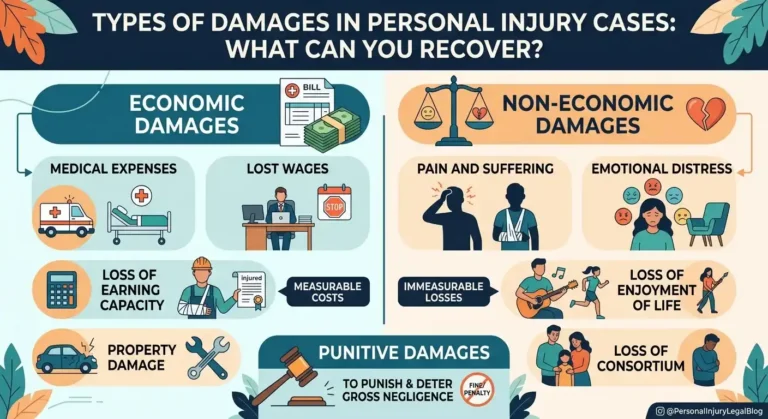
We claim every medical bill, including physical therapy that continues months after the crash. A client who covered missed shifts with sick days is still owed lost wages for that time. Pain and suffering is a separate item, and California sets no ceiling on it in car crash cases. A drunk driver can also face punitive damages.
First Moves for a Passenger in the Days After the Crash
A passenger should see a doctor the same day. Whiplash and concussions often appear a day or two later, and insurers treat a week without a doctor’s visit as evidence that nothing serious happened. It also helps to get the police report number and take photos of both cars at the scene. Within days, an insurance adjuster usually calls asking to record a statement. A passenger has no obligation to give one, and we advise clients to refer every such call to counsel.
California Filing Deadlines for Injured Passengers
Under California’s statute of limitations, an injured passenger has two years to file a lawsuit. After that, even a strong case is usually lost. A crash with a city bus or a county truck runs on a much tighter schedule. The agency has to receive formal written notice within six months, and the personal injury lawsuit can be filed only once that notice is rejected. Children get more time because their two years usually start at 18, though the six-month rule for public agencies still applies.
When Should a Passenger Call a Lawyer?
Before signing anything an insurer sends. A routine-looking medical authorization can open years of unrelated records. A California car accident attorney at Landver Law can secure camera footage before it’s overwritten and handle every insurer involved. We charge nothing upfront and take a fee only if we win compensation. Anyone still unsure how to answer “I was a passenger in a car accident, who do I sue?” can bring the crash details to a free consultation and leave with a concrete answer.
Frequently Asked Questions
Yes. If each driver played a part in the collision, both go into the complaint, and each one’s insurer pays its share.
It may. When the careless drivers carry too little coverage, or none, a passenger can fall back on their own policy. MedPay from that policy often pays as well.
The claim survives. Compensation can be reduced only for injuries a belt would have prevented, and the defense must prove that.
Yes, through a parent or guardian, and any deal with the insurer needs a judge’s approval before the money is released.
Finger-pointing between drivers happens in most two-car cases, and it rarely hurts the passenger. We name both drivers and let the evidence set the percentages.