
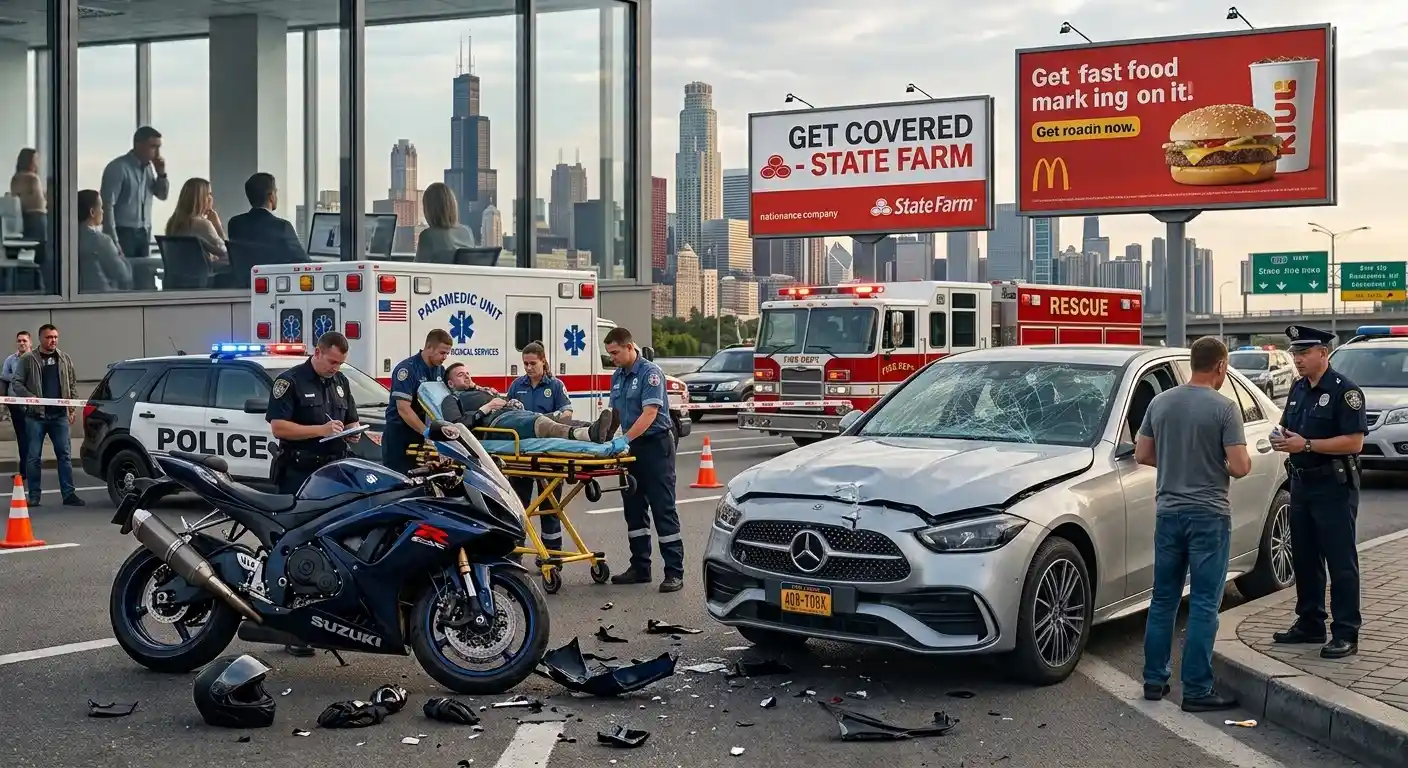
A motorcyclist is about 27 times more likely to die per mile traveled than someone riding in a car, according to NHTSA motorcycle fatality data. Injuries also tend to be more severe, and insurers value these two kinds of claims very differently. What most riders don’t realize until they’re in the middle of it: they get blamed for speeding or reckless maneuvers far more often than the evidence actually supports, and proving that assumption wrong is usually the hardest part of a motorcycle vs car accident claim. Win that argument, and fair compensation follows. Lose it, and the whole case slows down.
How Common Are Motorcycle Accidents Compared to Car Accidents
There are simply more cars than motorcycles on California roads, and that shows up in the raw crash totals long before anyone gets near a courtroom. Car accidents vs motorcycle accidents, purely as a numbers game, aren’t close. Motorcycles make up a small share of registered vehicles and an even smaller share of miles actually driven, yet motorcyclists accounted for 16% of all U.S. traffic deaths in 2024. That imbalance is really what a motorcycle accidents vs car accidents comparison is getting at, and it explains why insurance adjusters treat these files so differently the moment one lands on their desk. If you’ve been hurt on a bike, a Motorcycle Accident Attorney in California can usually tell you where things stand fairly quickly.
Fatality Rates: Motorcycles vs. Cars
Deaths Per Mile Traveled
NHTSA’s 2024 figures show motorcyclists dying at 28.00 per 100 million vehicle miles traveled, next to 1.05 for people in cars, and once you run those numbers side by side you get a fair sense of the chances of motorcycle accident vs car: close to 27 times higher for someone on two wheels. That gap narrowed a bit compared to the year before. Not because riding got safer, though, riders simply put more miles on the road in 2024, and the rate is built around exposure rather than headcount alone.
Motorcyclists’ Share of Total Traffic Fatalities
6,228 motorcyclists were killed on U.S. roads in 2024, a number that comes out to 16% of every traffic fatality nationwide even though bikes are a tiny fraction of what’s actually out there. One thing that’s shifted over the years: the percentage of motorcycle accidents involving riders 50 and older keeps climbing, now approaching a third of all rider deaths, up from a fraction of that decades ago when younger riders made up most of the fatalities. None of that changes what happens in a crash. A 55-year-old and a 25-year-old face the same physics once a car pulls into their lane.
Injury Severity – TBI, Spinal Injuries, and Other Differences
Traumatic Brain Injuries
A traumatic brain injury motorcycle crash looks nothing like whiplash. No cage, no airbags. A rider’s head usually hits first: pavement, a curb, another vehicle. Helmets cut death risk by about 37% and brain injury by roughly 67%, which is why California’s motorcycle helmet law requires one on every rider and passenger.
Spinal Cord and Internal Injuries
Road rash sounds minor until you’ve seen it at highway speed. Fractured pelvises, crushed vertebrae, internal bleeding – these show up constantly in motorcycle injury compensation claims and bring more paperwork than a typical car file.
Recovery Time and Long-Term Costs
Car occupants often walk away with a sore neck. Riders more often face surgery, months of therapy, a body that doesn’t work quite right again. Lost wages, adaptive equipment, ongoing pain care – none of it’s in the police report. It shows up in the settlement number instead.
Common Causes: Motorcycle Accidents vs. Car Accidents
Different crashes, different mechanics. Motorcycle accident causes and car accident causes rarely come from the same place.
| Causes of Motorcycle Accidents | Causes of Car Accidents |
| Drivers failing to yield in left-turn accidents motorcycle riders can’t avoid in time | Distracted driving |
| Lane changes into a blind spot | Following too closely |
| Road hazards motorcycle safety issues like potholes and gravel | Unsafe speed for conditions |
| Rear-end hits at stoplights | Failure to yield |
| Reduced motorcyclist visibility at night or in bad weather | Impaired driving |
Why Motorcyclists Face Higher Risk on the Road
Size works against a rider first. A motorcycle is a fraction of a car’s visual footprint, so mirror checks miss it more than drivers admit. No crumple zone, no airbags: one mistake by someone else turns catastrophic in a way it never would in a car vs motorcycle accident. Weather and road debris a car shrugs off can put a rider down entirely. Defensive riding helps. It can’t beat physics.
How These Differences Affect Your Legal Claim
Motorcycle vs car accident statistics like these shape the claim itself. They shape how an insurer treats it from the first call.
Determining Fault After a Motorcycle Accident
Fault gets contested harder in a motorcycle vs car accident than in a typical car-on-car case. Adjusters and witnesses often assume the rider was speeding or weaving before anyone checks the real evidence. That assumption is often wrong, and it’s hard to overturn without skid marks, dashcam footage, or a reconstruction expert. Insurance bias against motorcyclists shows up here most, which is why evidence matters earlier for riders than for most drivers.
Insurance Coverage Differences
Uninsured motorist coverage matters more for riders. Roughly one in six California drivers carries no liability insurance, and a rider hit by one absorbs the medical bills with nowhere else to send them. Check your UM/UIM limits before you need them; it takes twenty minutes.
California’s Statute of Limitations and Comparative Negligence Rules
Injury victims in California get two years from the date of the crash to file suit, under Code of Civil Procedure Section 335.1, and that deadline doesn’t wait for anyone to feel ready. Miss it, and courts will typically toss the claim outright, no matter how solid the underlying case might have been. California also has a pure comparative negligence rule: a rider found partly responsible can still recover damages, reduced by their assigned share of fault. Someone found 60% at fault, for instance, still walks away with the remaining 40%. That same comparative negligence California framework carries over into wrongful death motorcycle accident claims too.
Safety Tips for Motorcyclists and Drivers
None of this is meant to scare anyone off a bike. Riding is riding, and plenty of people do it safely for decades. It’s really just context for why the habits below matter more than most riders realize. If a crash happens anyway, despite doing everything right, it helps to know that a California Car Accident Attorney and a motorcycle-focused attorney don’t always read the same set of facts the same way, so figuring out which kind of case you actually have is worth doing early.
How Riders Can Reduce Their Risk
Full gear, every ride, not just long trips. Wear reflective gear and keep your headlight on, day or night. Distance from anyone who might turn without warning. Defensive riding at intersections, where left-turn accidents motorcycle crashes happen most. Follow CHP guidance on lane splitting California allows, since it matters if fault gets disputed.
What Drivers Can Do to Watch for Motorcycles
Get in the habit of checking mirrors and blind spots twice before changing lanes, since a motorcycle’s narrow profile hides easily in that first glance. Give riders real following distance; they stop faster than cars do. Look twice before turning left across traffic. Spending a few extra seconds on that check is a small price to pay compared with a crash that can change someone’s life for good.
Frequently Asked Questions
That’s really the whole reason behind every motorcycle accident vs car accident statistics comparison out there. That’s why every motorcycle accident vs. car accident statistics comparison exists.
Yes, in a few real ways. Fault tends to get scrutinized more closely when a motorcycle’s involved, insurance bias against motorcyclists is a documented problem rather than just a rider complaint, and the injuries themselves are usually more severe and more expensive to treat.
It’s a factor an insurer may raise, not an automatic bar. Under comparative negligence, California applies; it could shrink your recovery percentage, not erase it.
Not automatically, no. Lane splitting is legal under California Vehicle Code 21658.1, though the details, how fast a rider was going, how much space they left, what the road conditions looked like, can all still end up factoring into who’s at fault if something goes wrong.
Medical bills tend to run higher, and recovery drags on longer for riders, so motorcycle injury compensation usually puts more weight on long-term care and lost future income than a typical car accident vs motorcycle accident claim would.