
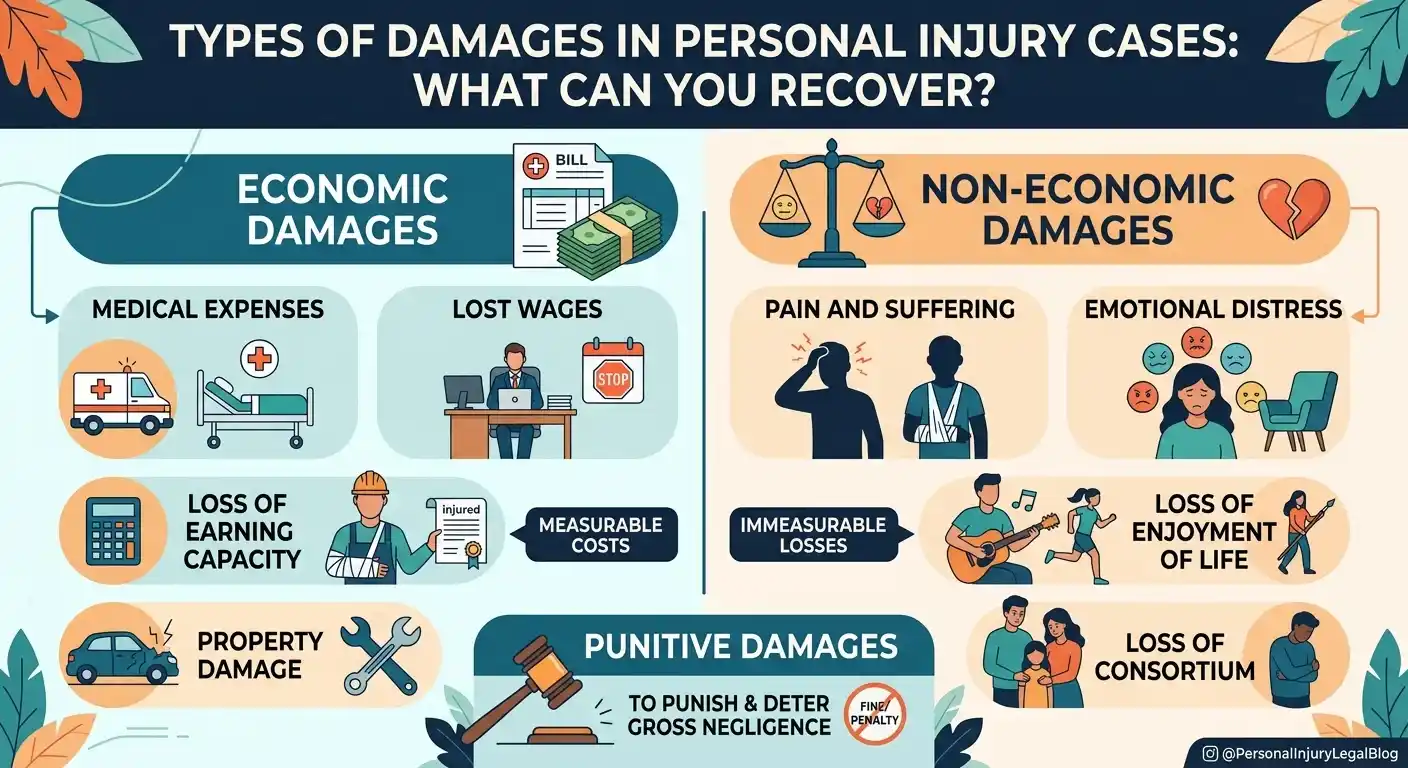
After an accident, the types of damages in personal injury cases usually break down into three groups: economic, non-economic, and, occasionally, punitive. Together they can cover medical bills, lost wages, pain and suffering, and other losses tied to what happened to you.
How much of that you can actually recover depends on the specifics of your case, and that’s exactly where Landver Law can help you figure out where you stand.
The Three Main Categories of Personal Injury Damages
Damages in personal injury cases fall into three buckets, and each one answers a different question. What did the accident actually cost you? How did it change your life day to day? And did the other side act badly enough to warrant extra punishment? Most claims only need answers to the first two questions. An injury lawyer reaches for the third only when the facts truly call for it.
Economic Damages
This category comes with paperwork attached, which makes it the most straightforward to prove. Medical expenses, hospital stays, physical therapy, missed paychecks, sometimes a hit to future earning power too. Insurance companies review these numbers line by line, so keep every bill.
Non-Economic Damages
Pain doesn’t show up on a receipt. Neither does losing sleep over what happened, or giving up a hobby you loved because your body won’t cooperate anymore. Juries and adjusters end up comparing your case to similar ones and weighing medical severity to arrive at a figure, and that’s usually where legal representation matters most.
Punitive Damages
Rare, and for good reason. Courts only allow them when a defendant’s conduct crosses from careless into something closer to reckless or intentional, drunk driving or a knowingly ignored safety hazard, for example. Under California law, you need clear and convincing evidence of oppression, fraud, or malice before punitive damages even get discussed.
What Losses Can Be Included in a Personal Injury Claim?
A solid claim goes beyond the ER bill. Property damage counts, and so does mileage to appointments, home modifications for a lasting injury, or the cost of hiring help for tasks you used to manage on your own. The common types of damages in personal injury cases tend to expand once a lawyer looks past that first receipt.
How Are Personal Injury Damages Calculated?
No calculator gives you a real number here. Insurers and courts weigh several factors together, which is why two people with nearly identical injuries can end up with very different compensation.
Factors That Affect the Value of a Claim
The severity and permanence of the injury carry the most weight, followed by how clear liability is. A documented disability paired with an at-fault driver caught on camera looks nothing like a soft-tissue injury with disputed fault. Age, prior health, and occupation matter too, sometimes more than people expect.
Methods Used to Estimate Non-Economic Damages
The multiplier method takes your economic losses and multiplies them by a number tied to severity, usually between 1.5 and 5. The per diem method assigns a dollar value to each day of pain until you’ve recovered. Neither is exact, but both give negotiators a starting point.
What Evidence Supports Different Types of Damages?
Compensation follows the paperwork. A thin file sinks strong cases more often than weak facts do.
Medical and Treatment Records
Log every visit, consistently, with no gaps. Skip an appointment and an insurer will argue the injury couldn’t have been that serious if you weren’t in a hurry to treat it.
Employment and Financial Documentation
Pay stubs and tax returns turn a vague income claim into a real number, and an employer letter confirming missed shifts helps too. Self-employed people can use business records comparing income before and after the accident.
Evidence of the Injury’s Impact on Daily Life
Photos, a pain journal, a coworker mentioning you couldn’t lift boxes anymore. Small details like these are often what convince a jury a claim isn’t just numbers on a spreadsheet.
How Damages May Vary by Type of Personal Injury Case
Not every accident causes the same kind of harm, and the law reflects that.
Car and Other Vehicle Accidents
Collisions tend to produce fairly straightforward damages personal injury attorneys can document quickly, thanks to police reports and repair estimates. California’s insurance rules also shape how claims against more than one driver get resolved.
Premises Liability and Slip-and-Fall Cases
Here, the whole thing usually hinges on one question: did the property owner know about the hazard, or should they have known, and did they let it sit anyway? Old maintenance logs and store camera footage tend to settle that argument before anyone sets foot in a courtroom.
Serious or Permanent Injuries
A shattered spine, a brain injury that changes who someone is, a missing limb these aren’t cases you can put a quick number on. They pull in doctors and life-care planners who can speak to what decades of treatment actually cost, and the compensation ends up matching that scale.
Wrongful Death Claims
When someone dies because of another party’s negligence, their family can go after funeral costs, the income that household lost, and the relationship itself. California is strict about who’s allowed to bring this kind of claim, so figuring out standing early on matters just as much as proving what happened.
What Can Affect the Compensation You Ultimately Receive?
People are often surprised how much fault percentages move the needle. Get labeled 30% responsible and your payout drops by roughly that much, though it never disappears completely under California’s rules. Beyond that, an insurance policy’s limits, whether the other driver or business can realistically pay out, and which county the lawsuit gets filed in can all push the final number up or down.
Frequently Asked Questions
Yes, and that surprises a lot of people. California doesn’t cut you off even if you’re mostly to blame, say 90%. Instead, your payout gets trimmed by whatever share of fault a jury or adjuster assigns you.
Generally, though attorneys tend to hold off filing until doctors say you’ve hit maximum medical improvement, meaning your condition has stabilized. If you settle before that point, you’re guessing at future costs, which usually means shortchanging yourself.
Two years, counted from the date you got hurt, per California Code of Civil Procedure Section 335.1. A few exceptions apply, minors get more time, and so do injuries nobody could have caught right away.